
16th Sunday in Ordinary Time US Catholic Homily
US Catholic Homily — July 19, 2026
Lectionary Year A · Ordinary Time
First Reading: Wisdom 12:13, 16–19 | Psalm 86 | Second Reading: Romans 8:26–27 | Gospel: Matthew 13:24–43
“The kingdom of heaven may be likened to a man who sowed good seed in his field. While everyone was asleep his enemy came and sowed weeds all through the wheat, and then went off… Let them grow together until harvest.” — Matthew 13:24–25, 30
Sunday Homilies A Sunday Homilies B Sunday Homilies C
❖ ✝ ❖
The God Who Waits: Patience, Mercy, and the Kingdom That Grows in Secret
Good morning, brothers and sisters in Christ. Last Sunday we knelt before the extravagant Sower who scatters the word of God lavishly over all kinds of soil, and we heard the promise of Isaiah that the word does not return empty — that the harvest is coming, on God’s timetable, even from the most unlikely ground. We were challenged to ask what kind of soil we are and to cultivate the practices that make us receptive.
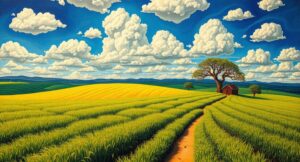
Today, on the Sixteenth Sunday in Ordinary Time, the Gospel gives us three more parables from Matthew 13 — the great parable chapter that is sometimes called the “sermon by the sea.” And these parables introduce us to a quality of God that the American character finds particularly difficult: patience. Not the passive patience of someone waiting in line, but the active, purposeful, watchful patience of a Farmer who sees the weeds growing among the wheat and says: do not pull them yet. Let them grow together. Trust the harvest.
This is not the God of immediate results, of instant resolution, of decisive intervention that cleans up every mess on our schedule. This is the God who allows the wheat and the weeds to coexist, who hides His Kingdom in a tiny mustard seed and a woman’s handful of yeast, who is less worried about the weeds than we are — and far more confident about the harvest. This is a God whose mercy gives time for repentance, whose patience extends to those we would have already condemned, and whose power works most effectively in secret, in smallness, in the hidden growth of things too small to see.
Three readings weave together into a single luminous portrait. The Book of Wisdom shows us a God whose power is the very ground of His leniency — He can afford to be patient because He is never not in control. Paul, in one of the most intimate verses in all of his letters, tells us that when we do not know how to pray, the Spirit prays in us with groanings too deep for words. And Jesus tells three interlocking parables about a Kingdom that looks nothing like power usually looks — that grows from seeds so small they are nearly invisible, that works from within like yeast in dough, and that will not be fully revealed until the harvest at the end of the age.
❖ ✝ ❖
“You Give Repentance for Sins”
First Reading — Wisdom 12:13, 16–19
For neither is there any god besides you who have the care of all, that you need show you have not unjustly condemned; for your might is the source of justice. For you show your might when the perfection of your power is disbelieved; and in those who know you, you rebuke presumption. But though you are master of might, you judge with clemency, and with much lenience you govern us; for power is at your service whenever you will. And you taught your people, by these deeds, that those who are just must be kind; and you gave your children good ground for hope that you would permit repentance for their sins.
The Book of Wisdom is a late book of the Old Testament, written in Greek in Alexandria, Egypt, probably in the first century before Christ. It represents Jewish wisdom engaging seriously with the Hellenistic philosophical tradition — and in this passage, it arrives at a conclusion that Greek philosophy, with its image of the gods as arbitrary and indifferent, could never have reached: the God who is most powerful is also most merciful, precisely because power without threats has no need for intimidation.
“Your might is the source of justice.” Not might in the service of justice, as if power and ethics were separate tracks that happen to converge. Might *is* the source — the origin, the ground — of justice. Because God is all-powerful, He does not need to be capricious. Because God lacks nothing, He can give without calculating cost. Because God cannot be threatened, He can be patient without looking weak.
“You gave your children good ground for hope that you would permit repentance for their sins.” This is the theological heart of the parable of the wheat and the weeds: God allows the weeds to grow not because He is indifferent to evil, but because He is giving the weeds time to become wheat. The patience of the Farmer is not moral indifference. It is redemptive patience — the patience of Someone who knows that the person who looks like a weed today might be wheat by harvest time. And Someone who also knows — and this is where we must be honest — that we are not always as clear about which is which as we think.
❖ ✝ ❖
Responsorial Psalm — Psalm 86:5–6, 9–10, 15–16
R/ Lord, you are good and forgiving.
Lord, you are good and forgiving, abounding in kindness to all who call upon you. Hearken, O LORD, to my prayer and attend to the sound of my pleading. All the nations you have made shall come and worship you, O Lord, and glorify your name. For you are great and you do wondrous deeds; you alone are God. You, O LORD, are a God merciful and gracious, slow to anger, abounding in kindness and fidelity. Turn toward me, and have pity on me.
Psalm 86 is a psalm of pure appeal — a prayer that rests entirely on the character of the God being addressed. The psalmist does not argue for his own worthiness. He argues from God’s nature: “You are good and forgiving, abounding in kindness.” “You are merciful and gracious, slow to anger.” These are the qualities that make the appeal possible. If God were quick to anger, prayer would be dangerous. If God were not good, appeal to His goodness would be futile. The entire act of prayer — and the entire logic of the parable of the wheat and weeds — rests on this prior conviction: God is good. God is patient. God can be trusted to handle the harvest without our premature intervention.

“All the nations you have made shall come and worship you.” The psalm has a cosmic scope that matches the cosmic patience of the First Reading. God’s patience is not waiting for a few people to get their act together. It is waiting for all the nations — the full breadth of human diversity — to find their way to the only worship that satisfies. The mustard seed that becomes a great tree, giving shelter to the birds of the sky (Matthew 13:32), is precisely this vision: from a tiny beginning, a tree large enough for all.
❖ ✝ ❖
“The Spirit Intercedes with Inexpressible Groanings”
Second Reading — Romans 8:26–27
Brothers and sisters: The Spirit comes to the aid of our weakness; for we do not know how to pray as we ought, but the Spirit himself intercedes with inexpressible groanings. And the one who searches hearts knows what is the intention of the Spirit, because he intercedes for the holy ones according to God’s will.
This is one of the most tender and consoling verses in all of Saint Paul, and it deserves to be held in the hands of prayer rather than rushed past on the way to the Gospel. Paul says three things that carry enormous pastoral weight. First: we do not know how to pray as we ought. This is not a failure of the individual — it is the condition of the creature before the Creator. The gap between our capacity for prayer and the prayer we actually need is too great for us to bridge by our own effort. We need help. And the help is given.
Second: the Spirit intercedes with “inexpressible groanings.” The Greek word is *stenagmois alaletois* — groanings that cannot be spoken, wordless prayers deeper than language. Last Sunday Paul told us that all creation is groaning in labor pains. Now he tells us that the Holy Spirit is also groaning — from within us, on our behalf, with a prayer that goes deeper than any prayer we could formulate ourselves. The Spirit does not wait for us to get our prayer life together. The Spirit prays in us before we find the words.
Third: the one who searches hearts — the Father — knows what the Spirit intends, because the Spirit intercedes “according to God’s will.” The prayer that rises from us in moments of our deepest inadequacy — when we are too tired to pray properly, too grief-stricken to organize our thoughts, too lost to know what to ask for — that prayer is the most Spirit-saturated prayer we ever offer. Because it is no longer filtered through our own management. It is pure intercession, groaned from the depths of the divine life within us.
This is the consolation that accompanies the patience demanded by the parable of the wheat and weeds. We cannot fix the situation. We cannot sort out the wheat from the weeds on our own. We cannot pray with the clarity and confidence that we wish we had. But the Spirit can. And the Spirit does. Our inability is not an obstacle to God’s work. It is the very space in which the Spirit operates most freely.
❖ ✝ ❖
16th Sunday in Ordinary Time US Catholic Homily
Three Parables, One Kingdom: Weeds, Seeds, and Yeast
Gospel — Matthew 13:24–43
Jesus proposed another parable to the crowds, saying: “The kingdom of heaven may be likened to a man who sowed good seed in his field. While everyone was asleep his enemy came and sowed weeds all through the wheat, and then went off. When the crop grew and bore fruit, the weeds appeared as well. The slaves of the householder came to him and said, ‘Master, did you not sow good seed in your field? Where have the weeds come from?’ He answered, ‘An enemy has done this.’ His slaves said to him, ‘Do you want us to go and pull them up?’ He replied, ‘No, if you pull up the weeds you might uproot the wheat along with them. Let them grow together until harvest.'” Then, dismissing the crowds, he went into the house. His disciples approached him and said, “Explain to us the parable of the weeds in the field.” He said in reply, “He who sows good seed is the Son of Man, the field is the world, the good seed the children of the kingdom. The weeds are the children of the evil one, and the enemy who sows them is the devil. The harvest is the end of the age, and the harvesters are angels. Just as weeds are collected and burned, so will it be at the end of the age. The Son of Man will send his angels, and they will collect out of his kingdom all who cause others to sin and all evildoers… Then the righteous will shine like the sun in the kingdom of their Father. Whoever has ears, let them hear.”

The Parable of the Wheat and Weeds is one of the most important — and most frequently misunderstood — parables in the Gospels. It is sometimes read as a warning against trying to purify the Church, or as an argument for moral tolerance. But its real point is something more specific and more demanding: it is a teaching about the limits of human judgment and the trustworthiness of divine timing.
The weed in the parable is almost certainly *darnel* (*zizanion* in Greek) — a weed common in Palestine that, in its early stages, is virtually indistinguishable from wheat. The two plants look the same until they are almost fully grown. To pull the weeds early is to risk pulling the wheat. The slaves want to act now, decisively, with the clean efficiency of those who are certain they can identify the problem. The master says: wait. You cannot yet distinguish them with certainty. Let the harvest reveal what time has matured.
This is a teaching about humility before the mystery of the human heart. We are not, as individuals or as communities, equipped to make final judgments about who is wheat and who is weed. The person who looks like a weed to us — whose behavior, whose history, whose choices seem to place them outside the Kingdom — may be wheat that has not yet matured. Raymond, Sister Angela’s student from last Sunday’s story, looked like darnel for thirty years. He was wheat all along.
But the parable does not end in comfortable ambiguity. The harvest comes. The separation happens. The angels — not us — do the sorting. The righteous shine like the sun. The weeds are burned. Jesus is not a universalist who denies the reality of final judgment. He is saying: the judgment is real, it is coming, and it is God’s to make. Ours is not to judge prematurely. Ours is to tend the field, scatter the seed, pray for the weeds, and trust the Harvest Master.
The parables of the mustard seed and the yeast make the same point from a different angle. The mustard seed is the smallest of all seeds — *sinapi*, so tiny it was proverbial for smallness in the ancient world — yet it grows into a shrub large enough for birds to nest in its branches. The Kingdom does not announce itself with fanfare or immediately overwhelm the landscape. It begins where almost nothing seems to be beginning. And yeast: a woman takes a small amount and works it into three measures of flour — enough to feed over a hundred people. The Kingdom works from within, invisibly, transforming what it touches without drawing attention to itself.
Brothers and sisters, these three parables together describe the Kingdom of God as it actually operates in the world and in the Church: patiently, hiddenly, from small beginnings, through ordinary people and ordinary moments, without the clean efficiency of human intervention. This is not what we usually want from God. We want dramatic intervention, visible results, immediate sorting. Jesus says: learn patience. Learn to live with the weeds. Learn to trust what you cannot see growing. The harvest is coming.
❖ ✝ ❖
A Story for the 16th Sunday: The Pastor Who Did Not Pull the Weeds
There was a pastor named Father Michael who had been assigned to a mid-sized parish in Ohio for eight years. During his second year, a conflict erupted in the parish that divided the community in ways that were still raw six years later. A group of longtime parishioners had felt dismissed by a decision Father Michael made about the renovation of the parish hall. They had organized, complained to the diocese, and, when their concerns were not fully addressed, begun attending a neighboring parish — while continuing to make their grievances known in the community.
Father Michael’s closest friends on the parish staff urged him, repeatedly, to address the conflict directly — to call out the behavior, to name names from the pulpit, to draw a clear line. “Pull the weeds,” one staff member said to him, using exactly those words. “This is damaging the parish.”
Father Michael sat with that advice for three months of prayer. He went back, repeatedly, to the parable of the wheat and the weeds. And he made a decision that frustrated nearly everyone: he would not pull. He would pray. He would reach out personally, quietly, one conversation at a time, without public confrontation. He would tend the wheat — invest his energy in growing what was good rather than eradicating what was difficult.
The conflict did not resolve cleanly. Several families never returned. Some wounds remained tender. But over six years, three remarkable things happened. Two of the most vocal critics of Father Michael eventually came to him privately — separately, neither knowing about the other — and apologized. One became one of his closest collaborators. A family that had left the parish entirely returned after four years and brought two other families with them. And a young man who had watched the whole conflict from the perspective of a college student, unsure whether faith was worth the trouble, told Father Michael five years later that his handling of the situation had been the single most convincing demonstration of the Gospel he had ever witnessed.
“Let them grow together until the harvest.” The patience of the Farmer is not indifference. It is the long game of Someone who knows that forcing the separation now risks destroying what might yet become wheat. Father Michael did not pull the weeds. He tended the wheat. And the harvest, when it came — partial, imperfect, still in process — was more than he had dared to hope.
❖ ✝ ❖
An American Saint of Patient Mercy: Saint Peter Claver
For this Sunday of patience and hidden Kingdom growth, we turn to a Spanish Jesuit who served in the New World and whose ministry in the Americas made him one of the most remarkable figures in the history of the Catholic Church: Saint Peter Claver, whose feast day falls on September 9.
Peter Claver was born in Catalonia, Spain, in 1581. He entered the Society of Jesus and was sent to Cartagena, Colombia — then one of the primary ports of the transatlantic slave trade. In the harbor of Cartagena, slave ships arrived from West Africa regularly, carrying human beings in conditions of such horror that ten to thirty percent of those loaded in Africa died before reaching port. Peter Claver met those ships.
He would go down into the holds before the enslaved people were brought on deck — into the darkness and the filth and the unbearable stench — and he would bring food, medicine, brandy, tobacco, fruit, and himself. He would sit with the dying. He would baptize those who were close to death. He would learn enough of the relevant languages — he worked with translators from Senegal, Angola, and the Congo — to communicate basic care and the basic message: you are loved. You have not been abandoned. God knows you are here.
Over forty-four years of ministry, Peter Claver is estimated to have personally baptized and ministered to more than three hundred thousand enslaved Africans. He called himself “the slave of the Africans forever.” He faced constant opposition from the planters, from some of his fellow Jesuits, from members of the colonial establishment who found his ministry subversive. He did not pull weeds. He planted seed — in the darkest, most degraded soil imaginable — with a patience rooted in the absolute conviction that every one of those human beings was infinitely precious to God.
Saint Peter Claver was canonized in 1888 by Pope Leo XIII, who simultaneously canonized his mentor, Saint Alphonsus Rodriguez. He is the patron of African Americans, of enslaved peoples, and of those who minister to the marginalized. His ministry in Cartagena was the mustard seed that produced a tree under which hundreds of thousands found shelter.
“We must speak to them with our hands before we try to speak to them with our lips.” — Saint Peter Claver
❖ ✝ ❖
Living with the Weeds: What Patience Demands of American Catholics
Patience with the Church
One of the most common reasons American Catholics give for disengagement from the Church is the scandal of institutional failure — the sexual abuse crisis, the financial mismanagement, the hypocrisy of leaders. These wounds are real, and the anger they generate is just. But the parable of the wheat and weeds is addressed precisely to the person who wants to leave the field because of the weeds. The Church is the field where the Son of Man planted good seed. The weeds that have grown in it — the corruption, the failure, the sin of her members and leaders — are real. They do not define the wheat. The harvest will come. Leaving the field does not remove the weeds; it removes you from the wheat.
Patience with Those Who Are Not Yet Ready
Most of us carry in our hearts the image of someone we love who has not yet found their way to faith. A child who left the Church after confirmation. A spouse who comes to Christmas Mass but nothing else. A parent who lived a good life but whose faith remained private and attenuated. The parable of the wheat and weeds invites us to pray for them without judging them, to love them without coercing them, to trust that the seed planted in them — perhaps decades ago, perhaps by someone who is now gone — is still working underground. The Spirit intercedes for them with groanings too deep for words. So do we.
Patience with Ourselves
Perhaps the most demanding application of this Sunday’s readings is patience with our own slow growth. We know what we should be doing. We know how we should be praying. We know the thorns that are choking the word in us and the rocks that are preventing our roots from going deep. And we have known these things for years, perhaps decades, and we are still not where we want to be. The Farmer does not pull us up and replant us. He tends. He waits. He trusts. The Spirit prays in us with groanings we cannot articulate. The harvest is not yet. But it is coming.
❖ ✝ ❖
Scriptures to Carry Into This Week
- 2 Peter 3:9 — “The Lord is not slow about his promise as some think of slowness, but is patient with you, not wanting any to perish, but all to come to repentance.” The patience of God is not indecision. It is mercy extended to the maximum possible moment.
- Lamentations 3:22–23 — “The steadfast love of the LORD never ceases; his mercies never come to an end; they are new every morning; great is your faithfulness.” God’s patience is not running out. His mercies are new every morning — a daily renewal of the invitation to the weed to become wheat.
- Galatians 5:22 — “The fruit of the Spirit is love, joy, peace, patience…” Patience is listed among the fruits of the Spirit — not a natural virtue we achieve by gritting our teeth, but a fruit that grows in us as we allow the Spirit to work.
- Romans 5:3–5 — “We also boast in our sufferings, knowing that suffering produces endurance, and endurance produces character, and character produces hope.” The long game of Kingdom growth, applied to the interior life.
- Psalm 37:7 — “Be still before the LORD and wait patiently for him.” The Psalm of patient trust in God’s judgment — do not fret because of those who prosper in their evil ways. The harvest is God’s. Wait.
❖ ✝ ❖
Conclusion: Trust the Harvest Master
Brothers and sisters, we live in a culture of urgency — of instant results, immediate resolution, same-day delivery. The parables of this Sunday are profoundly counter-cultural: a Farmer who says wait, a mustard seed that takes years to become a tree, yeast that works invisibly from within over hours. The Kingdom does not operate on our schedule. And the extraordinary mercy of this fact is that neither does God’s patience.
You are, in some aspect of your life, living with weeds you cannot pull. A relationship that is broken. A habit that resists change. A wound that has not yet healed. A conflict in your family or your parish that has no clean resolution. An interior battle that has been going on for years. The Farmer says: let them grow together until harvest. Not because the weeds don’t matter. Because the harvest will reveal what time, patience, prayer, and the Spirit’s hidden work have been building all along.
When we do not know how to pray — and we do not always know — the Spirit intercedes with groanings too deep for words. That is enough. That is more than enough. The harvest is in the hands of the One who is both perfectly just and endlessly merciful, who gave good seed to His people and will not let the enemy’s weeds have the last word.
Trust the Harvest Master. The righteous will shine like the sun. Whoever has ears, let them hear.
Glory and praise for ever. Amen.
❖ ✝ ❖
Reflection Questions for Personal Prayer or Group Discussion
1.. The Book of Wisdom says God’s power is the source of His leniency — because He is all-powerful, He can afford to be patient. Where in your own life are you being called to exercise a patience rooted in trust of God’s power rather than anxiety about the outcome?
2.. Paul says the Spirit intercedes for us “with inexpressible groanings” when we do not know how to pray. Have you experienced a season when your prayer was reduced to wordless groaning? Looking back, how do you understand what the Spirit was doing in that silence?
3.. The master in the parable refuses to pull the weeds because the servants cannot yet distinguish them reliably from the wheat. Is there a person or a situation in your life where you have been tempted to make a final judgment that perhaps belongs to God? What would patience look like in that situation?
4.. Saint Peter Claver said he would speak “with his hands before his lips” — that practical, bodily care was the language of the Gospel to those who had every reason to distrust words. Who in your life needs to be spoken to with your hands first?
5.. Father Michael chose to tend the wheat rather than pull the weeds, and the harvest — imperfect and partial — exceeded his hopes. Where in your parish or community might the energy spent on conflict and purity be better spent on cultivating what is already growing well?
❖ ✝ ❖
Prayers of the Faithful — 16th Sunday in Ordinary Time
Presider: Brothers and sisters, living in the field where wheat and weeds grow together, sustained by a God whose patience is the ground of our hope, let us bring before the Father the needs of His Church and His world.
- For the Catholic Church in the United States: that she may embody the patience of the Farmer — neither rushing to judgment nor ignoring the weeds, but tending the wheat with the long-game confidence of those who trust the Harvest Master. We pray to the Lord.
Lord, hear our prayer.
- For all who are struggling with anger at the Church’s failures — who have been wounded by scandal, betrayal, or injustice: that God’s patient mercy, which gives time for repentance and healing, may reach them and their wounds, and that the wheat of genuine faith may survive the damage the weeds have done. We pray to the Lord.
Lord, hear our prayer.
- For our nation in a time of deep and bitter division: that the patience of God — who does not desire any to perish but all to come to repentance — may shape the hearts of our leaders and citizens, replacing the urgency to destroy our opponents with the longer vision of a harvest yet to come. We pray to the Lord.
Lord, hear our prayer.
- For all who do not know how to pray — who are too exhausted, too grieved, too broken to form words: that the Spirit who intercedes with inexpressible groanings may pray in them what they cannot pray for themselves, and that they may know the prayer is happening even in the silence. We pray to the Lord.
Lord, hear our prayer.
- For the small and hidden works of the Kingdom — the yeast in the dough, the mustard seed in the ground, the nameless acts of charity, the unseen prayers of contemplatives, the patient witness of ordinary Catholics in ordinary lives: that God may use these small beginnings to grow something large enough for all the nations to find shelter in. We pray to the Lord.
Lord, hear our prayer.
- In honor of Saint Peter Claver, who descended into the holds of slave ships to carry the Gospel to the most abandoned: that his witness may inspire us to bring the Good News to those the world has most thoroughly discarded, and that the Church in America may never mistake comfort for mission. We pray to the Lord.
Lord, hear our prayer.
- For the faithful departed — for those who lived long lives of patient faith, who endured the weeds of suffering and sin without losing their trust in the harvest: that they may now shine like the sun in the Kingdom of their Father, and that we may one day join them in the joy that no weed can reach. We pray to the Lord.
Lord, hear our prayer.
Presider: Patient God, You allow the wheat and the weeds to grow together and You trust the harvest that only You can see. Teach us Your patience — not the patience of resignation but the patience of hope, rooted in the certainty of Your mercy and the power of Your Word at work in ways we cannot yet perceive. We ask this through Christ our Lord.
All: Amen.
❖ ✝ ❖
✝ ✝ ✝
16th Sunday in Ordinary Time · July 19, 2026 · Lectionary Year A · US Catholic Homily
homilysunday.com · Enriching Your Faith with Weekly Catholic Homilies
16th Sunday Homily – Useful information.

💬 Share Your Reflection