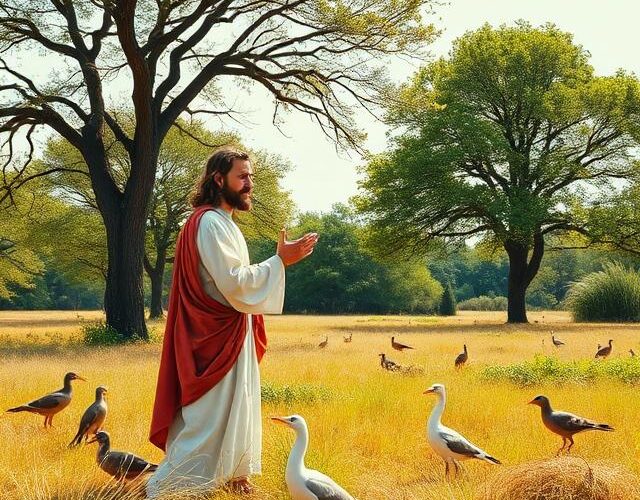
Catholic Discipleship Homily
“Come, follow me.” — Matthew 4:19 | “Whoever wants to be my disciple must deny themselves and take up their cross and follow me.” — Mark 8:34
Two words changed everything. “Follow me.” Jesus did not say: believe a set of doctrines, attend the right gatherings, or observe a code of rules. He said: follow me. Discipleship is not a programme — it is a relationship. It is not an ideology — it is a way of life. It is not something you complete — it is something you live, every day, for the rest of your life. A Discipleship Homily addresses the deepest question every baptised Christian must eventually answer: not merely “Do I believe?” but “Am I following?” This page offers a complete, Scripture-rooted, theologically rich, and pastorally honest guide for preaching on discipleship — the call, the cost, the community, and the extraordinary joy of walking in the footsteps of Jesus Christ.
“Come, Follow Me” — The Most Radical Invitation in History
In the first century Jewish world, a young man who wanted to study under a rabbi would approach the rabbi, present his credentials, and ask to be accepted as a student. The rabbi would evaluate his potential and decide whether to take him on. The direction of the invitation ran from student to teacher. What Jesus did was entirely different — and those who heard it would have recognised immediately just how extraordinary it was.
Jesus walked up to fishermen — working men, not scholars — and said simply: “Come, follow me, and I will send you out to fish for people.” (Matthew 4:19). He did not evaluate their credentials. He did not ask for their theological qualifications. He chose them. He initiated. He invited. And the most astonishing detail of all: “At once they left their nets and followed him.” (Matthew 4:20). No deliberation recorded. No conditions negotiated. They heard the call, recognised the Caller, and went.
This is the first thing a Discipleship Homily must establish: the call to discipleship comes from Jesus, not from us. We do not decide to follow Jesus as one lifestyle option among many. We are called — by name, personally, urgently, by the One who made us. That call may come through Scripture, through a person, through a moment of grace in prayer, through a crisis that strips away everything else. But it comes. And when it does, everything depends on how we respond.
What Is a Disciple? — More Than a Believer
The word disciple comes from the Latin discipulus — a learner, a student, an apprentice. In the Jewish tradition, a disciple of a rabbi did not merely learn the rabbi’s teaching — he imitated the rabbi’s life. He watched how the rabbi ate, prayed, treated people, responded to difficulty, observed the Sabbath. The goal was not to pass an exam but to become like the teacher. As the ancient Jewish saying put it: “May you be covered in the dust of your rabbi” — meaning, may you follow so closely that his footsteps’ dust falls on you.
This is what Christian discipleship means: not merely holding certain beliefs about Jesus, but becoming like Jesus. St. Paul captures it perfectly: “Follow my example, as I follow the example of Christ.” (1 Corinthians 11:1). And again: “I have been crucified with Christ and I no longer live, but Christ lives in me.” (Galatians 2:20). Discipleship is not an add-on to an otherwise unchanged life. It is a transformation of the whole self — mind, heart, habits, relationships, priorities, words — into the likeness of the one we follow.
The distinction between believing in Jesus and following Jesus is one of the most pastorally important distinctions a homily can make. Many Catholics have been baptised, confirmed, and attend Mass — and have not yet made the personal, active, daily decision to follow. A Discipleship Homily gently and urgently opens that question: “You believe. But are you following?”
The Cost of Discipleship — Jesus Was Honest About It
One of the things that distinguishes Jesus as a teacher is his refusal to recruit with false promises. He never said: “Follow me and your life will be comfortable, successful, and free of suffering.” He said the opposite: “Whoever wants to be my disciple must deny themselves and take up their cross and follow me.” (Mark 8:34). He told would-be followers to count the cost before they committed, like a builder who calculates whether he has enough to complete a tower before he begins (Luke 14:28–30).
The cross is not a metaphor for minor inconvenience. In the first century, a person carrying a cross was walking to their execution. Jesus was asking his followers to take up the instrument of death and walk with him toward it. This is the most demanding thing ever asked of any group of human beings — and yet millions across twenty centuries have done it, and found in doing it not annihilation but the fullest life they had ever known. The paradox of the cross is the paradox of discipleship: “Whoever wants to save their life will lose it, but whoever loses their life for me and for the gospel will save it.” (Mark 8:35).
After the crucifixion, two disciples walked away from Jerusalem — defeated, confused, their hopes shattered. A stranger joined them on the road and asked what they were talking about. They poured out their grief: “We had hoped he was the one to redeem Israel.” Then the stranger — who was the Risen Christ, unrecognised — began to open the Scriptures to them. Their hearts burned within them. And when he broke bread with them at the table, their eyes were opened. They ran back to Jerusalem.
This is the pattern of discipleship in every age: walking away in defeat, the Risen Christ joining us unrecognised, the Scriptures opening our hearts, the Eucharist opening our eyes, and then — running back.
The Twelve — Discipleship Is Always Particular
Jesus called twelve disciples — a number freighted with symbolic weight (the twelve tribes of Israel, the reconstitution of God’s people). But what is striking is not the number but the specificity. He did not call twelve interchangeable units. He called twelve very particular human beings — with names, temperaments, histories, and flaws. Peter the impulsive fisherman. Thomas the honest doubter. Matthew the despised tax collector. Simon the Zealot (whose political convictions were probably diametrically opposed to Matthew’s). Mary Magdalene, from whom seven demons had gone out. Joanna, the wife of Herod’s household manager.
Discipleship is never generic. It is always specific to the person who is called — to their gifts, their wounds, their history, their particular place in the world. This is enormously important to preach, because many people imagine that discipleship requires them to become someone else: a different personality, a different background, a different life story. But Jesus called the Twelve as they were, and worked with what they brought. He does the same with us. You do not have to become someone else to follow Jesus. You have to become more fully yourself — the self God made and called.
Discipleship Is Not Discipleship Without the Cross — Suffering and Growth
Every serious disciple, at some point, encounters what the tradition calls the “dark night of the soul” — a period where prayer feels dry, where God seems absent, where the enthusiasm of the early days of faith has given way to something much harder and much less comfortable. This is not a sign of failure. It is, according to the great spiritual writers, a sign of progress — a necessary passage from the consolations of faith to the reality of faith.
St. John of the Cross, St. Teresa of Ávila, Blessed Mother Teresa of Calcutta (whose private letters revealed decades of inner darkness) — all experienced this. The cross in the life of the disciple is not only the external sufferings of life but the interior suffering of growing beyond what one can manage on one’s own strength. This is precisely when discipleship becomes most real — because it is when the disciple discovers, by necessity, that following Jesus means depending entirely on Jesus. The Homily on Prayer explores this dimension of the interior life in full; a Discipleship Homily must name the dark night honestly, or it will not be believed by those who are living it.
Discipleship and the Word of God — The Scriptures as Daily Bread
A disciple who does not read the Scriptures is like a soldier who goes to battle without a weapon, or a musician who never practises — the metaphors are almost too obvious. “Your word is a lamp for my feet, a light on my path.” (Psalm 119:105). The Scriptures are not a devotional text to be dipped into occasionally for comfort. They are the primary means by which the Risen Christ continues to speak to his disciples — today, in this century, to this particular person in their particular situation.
The ancient practice of Lectio Divina — sacred reading — offers every disciple a structured way into this encounter. Not reading for information, not Bible study as academic exercise, but reading slowly, attentively, with the ear of the heart open: What is God saying to me, here, now, in this text? The four movements of Lectio Divina are simple: Lectio (read slowly), Meditatio (chew on a word or phrase), Oratio (respond in prayer), Contemplatio (rest in God’s presence). Any disciple who makes this a daily habit will find, over months and years, that Scripture becomes not a text they read but a language they speak — the language in which Christ speaks to them.
Discipleship and the Sacraments — Grace for the Journey
Discipleship is not a project of self-improvement by human effort alone. It is a life lived in dependence on grace — the supernatural assistance that God provides through the sacraments, through prayer, through the community of the Church, and through the Holy Spirit who dwells in every baptised person. A disciple who tries to follow Jesus on their own willpower and moral determination alone will fail — not because the desire is wrong but because the method is inadequate. The life of discipleship requires constant refuelling with divine grace.
The sacraments are the primary channels of that grace. Baptism initiates the disciple into the Body of Christ — it is the moment when the journey begins. The Eucharist sustains the disciple week by week — Christ himself becomes the food for the road. Reconciliation restores the disciple when they fall — and every disciple falls. Confirmation strengthens the disciple for mission. Marriage and Holy Orders configure the disciple’s whole life around a particular vocation and form of love. The Anointing of the Sick anoints the disciple for the final stage of the journey. The sacraments are not rituals that mark milestones — they are encounters with the living Christ that make the journey possible.
Discipleship in Community — We Follow Together
There is no such thing as a solitary disciple. Jesus did not call individuals to follow him in isolation — he called a community. The Twelve ate together, travelled together, argued together, failed together, and were sent out together. The early Church described in Acts was not a collection of private believers but a community that “devoted themselves to the apostles’ teaching and to fellowship, to the breaking of bread and to prayer.” (Acts 2:42). They held things in common, cared for one another’s needs, and were recognised by the world around them by the quality of their love for one another.
The Christian community — the parish, the small faith group, the family around the dinner table where grace is said — is not a support structure for individual discipleship. It is itself part of what discipleship is. We cannot become like Christ alone. We need other people to reflect Christ to us, to challenge us, to forgive us, to carry us when we cannot walk. The Homily on Forgiveness addresses what it costs to love in community when community becomes difficult. A Discipleship Homily must name the community as essential — not optional — to the life of following Jesus.
Discipleship and Mission — Followers Are Also Sent
At the end of Matthew’s Gospel, after the Resurrection, Jesus gives what has come to be called the Great Commission: “Go and make disciples of all nations, baptising them in the name of the Father and of the Son and of the Holy Spirit, and teaching them to obey everything I have commanded you.” (Matthew 28:19–20). The disciples are not called to remain in the upper room, comfortable and safe. They are called to go. Discipleship and mission are not two stages (first become a good disciple, then go on mission) — they are simultaneous. We learn to follow by being sent.
This is why the Confirmation Homily is so intimately connected to the Discipleship Homily — because Confirmation is the sacrament of mission, the moment when the disciple is strengthened by the Holy Spirit to take their place in the Church’s apostolic work. But mission is not only the work of priests, religious, and professional ministers. Every baptised person is sent — into their family, their workplace, their neighbourhood, their social media, their daily interactions — to bear witness to the Gospel by the quality of their lives and the readiness of their words.
The Marks of a Disciple — What Following Looks Like in Practice
Jesus was clear that discipleship has visible, recognisable marks — not as a checklist for judging others but as a self-examination for ourselves. Here is what Jesus himself said discipleship looks like:
| The Mark | What Jesus Said | What It Looks Like Today |
|---|---|---|
| Love for one another | “By this everyone will know that you are my disciples, if you love one another.” (John 13:35) | The quality of relationships in the parish, family, and workplace. Not perfection — but forgiveness, patience, and genuine care. |
| Bearing fruit | “This is to my Father’s glory, that you bear much fruit, showing yourselves to be my disciples.” (John 15:8) | The fruits of the Spirit (Galatians 5:22–23): love, joy, peace, patience, kindness, goodness, faithfulness, gentleness, self-control. |
| Remaining in the Word | “If you hold to my teaching, you are really my disciples.” (John 8:31) | Regular engagement with Scripture. Allowing the Word to shape decisions, attitudes, and responses — not just at Mass but daily. |
| Carrying the cross | “Whoever does not carry their cross and follow me cannot be my disciple.” (Luke 14:27) | Accepting the sufferings and difficulties of life as part of the journey, united to Christ’s own cross, rather than as evidence of God’s absence. |
| Letting go of all else | “Those of you who do not give up everything you have cannot be my disciples.” (Luke 14:33) | Holding all things — possessions, status, comfort, plans — loosely. Being willing to let anything go if following Jesus requires it. |
Great Disciples — Witnesses Who Show the Way
The most powerful arguments for the possibility of discipleship are not theological but personal — the lives of men and women who heard the call, paid the cost, and found the joy. These witnesses belong in every Discipleship Homily.
Denied Jesus three times in the courtyard of the high priest — and then, after the Resurrection, was asked three times: “Do you love me?” and restored. Peter’s story is the story of every disciple: the fall is not the end. The Risen Christ meets us in our failure and asks: will you still follow?
Remained at the tomb when the others had gone home. In her fidelity, she was the first to encounter the Risen Christ — and was sent immediately: “Go and tell my brothers.” The first apostle of the Resurrection was a woman of broken history who refused to stop following.
A wealthy merchant’s son who stripped himself literally naked in the town square, renounced his inheritance, and followed Christ in absolute poverty. Yet his life radiated such joy that thousands followed him, and his order became one of the greatest renewal movements in Church history.
Archbishop of El Salvador who began as a cautious conservative and became, through his encounter with the suffering poor, a fearless voice for the Gospel. Assassinated at the altar in 1980 while celebrating Mass. Beatified 2015, canonised 2018. The cross he preached became the cross he carried.
When Discipleship Falters — Peter on the Water
The story of Peter walking on the water (Matthew 14:22–33) is one of the most perfect portraits of discipleship in the entire New Testament — precisely because it shows both its possibility and its characteristic failure mode. Jesus walks toward the disciples across the water. Peter says: “Lord, if it’s you, tell me to come to you on the water.” Jesus says: “Come.” And Peter climbs out of the boat and walks on water — the only human being, other than Jesus, ever recorded to have done so.
But then he looks at the wind and the waves, and he sinks. Not immediately — he had been walking. He begins to sink when he takes his eyes off Jesus and focuses on the difficulty of his circumstances. Jesus reaches out immediately and catches him: “You of little faith, why did you doubt?” (Matthew 14:31). The key word is “little faith” — not “no faith.” Peter had enough faith to get out of the boat. He did not have enough to keep his eyes on Jesus through the storm. This is every disciple’s story. The call is to keep looking at Jesus — especially when the waves are highest.
Discipleship and Vocation — Every Life Is a Call
The call to discipleship is universal — every baptised person is called to follow Jesus. But within that universal call, there is a particular vocation — a specific form that discipleship takes in each person’s life. Marriage, priesthood, religious life, consecrated celibacy in the world — these are not competing options but different forms of the one call to love. And within those broad categories, there are further specificities: this particular work, this particular community, this particular gift placed in service of the Kingdom.
The Confirmation Homily is particularly important here — because Confirmation is the sacrament that sends the disciple out to live their vocation actively in the world. Young people especially need to hear that God has a specific, unrepeatable purpose for their life — not a vague general goodness, but a particular calling that only they can fulfil. “For we are God’s handiwork, created in Christ Jesus to do good works, which God prepared in advance for us to do.” (Ephesians 2:10). The works were prepared. The disciple’s task is to discover and do them.
How to Deepen Your Discipleship — A Practical Guide
A Discipleship Homily that only describes what discipleship is without helping people live it more fully is incomplete. Here is a pastoral guide for deepening the journey of following Jesus, wherever you are on the road.
-
1
Make the decision explicitly. Many Catholics have never consciously and personally said: “I choose to follow Jesus.” It is worth doing — deliberately, honestly, in prayer. “Lord Jesus, I choose to follow you. Not as a cultural Christian but as an active, daily disciple. Here I am.”
-
2
Read the Gospels daily. Begin with Mark — the shortest, most urgent Gospel. Read one passage each morning. Ask one question: What is Jesus doing here, and what does that mean for me today?
-
3
Return to the Sacraments. If you have been away from Confession, go. Come to Mass not as an obligation but as an encounter — the Risen Christ giving himself to you again. Let the Eucharist be the fuel for the week, not a ritual to discharge.
-
4
Find a community. A small group, a prayer group, a faith-sharing community, a few friends who take their faith seriously — discipleship cannot be lived in isolation. Ask: who is my community of disciples?
-
5
Find a mentor or spiritual director. The tradition of having a “soul friend” who helps you discern God’s voice in your life is ancient and enormously valuable. If formal spiritual direction is not accessible, find a mature Christian whose faith you respect and ask if they will meet with you regularly.
-
6
Identify your mission field. Where has God placed you? Your family, your workplace, your neighbourhood — these are your mission field. You don’t have to go to the other side of the world. Discipleship begins where you are, with the people already in your life.
-
7
Don’t wait until you are “ready.” No disciple ever felt fully ready to follow. Peter didn’t. The disciples didn’t. The saints didn’t. Readiness is not a prerequisite for following — it is a result of following. Begin where you are. Jesus will do the rest.
Discipleship and Eternity — The Journey That Never Ends
The call to discipleship is not a call to a programme with a graduation date. It is a call to a journey that begins at Baptism and ends — in its earthly form — at death. And even then, it does not end. The tradition teaches that the saints in heaven continue their journey into the inexhaustible mystery of God — a journey of ever-deepening knowledge and love that will never reach its final limit, because God himself has no limit. Heaven is not a static destination. It is an eternal adventure in the infinite love of God. Following Jesus does not stop at the grave. It deepens, for ever.
This is the ultimate word of a Discipleship Homily: you will never reach the end of this road in this life — and that is not a cause for discouragement but for joy. There will always be more of Jesus to know, more of his love to receive, more of his mission to share, more of his cross to carry and his Resurrection to proclaim. The road is long. The company is good. The destination is glorious. And the One who said “Come, follow me” at the beginning will be there at the end — and at every step in between.
Come, follow him. The road is worthy of the walking. The Master is worthy of the following. And the end — which is also the beginning of an eternity — is beyond anything the heart can imagine. ✝
“Lord, You Know That I Love You”
Lord Jesus, you who walked the shores of Galilee and called fishermen by name — call us again today. Whatever distance we have placed between ourselves and you, whatever distractions have pulled our eyes from the road, whatever fear has made us cling to the boat rather than step out onto the water — call us again.
We do not follow because we are strong or worthy or ready. We follow because you called us, and because you are worth following. Give us the grace to say yes again today — with our choices, our time, our relationships, our whole lives. Teach us what it means to carry the cross and find it light, to lose our lives and find them, to follow into the unknown and discover that you were there before us.
And when we falter — when we sink beneath the waves — reach out your hand as you reached out to Peter, and lift us up. For there is nowhere we would rather be than walking with you, however imperfectly, on this extraordinary, difficult, joyful, eternal road of discipleship.
Amen. ✝
Trusted External Resources for a Discipleship Homily
- Redemptoris Missio — John Paul II on Discipleship and Mission (Vatican.va)
- Evangelii Gaudium — Pope Francis on the Joy of the Gospel and Discipleship (Vatican.va)
- USCCB Online Bible — All Scripture passages referenced
- USCCB — Disciples in Mission: Resources for Parish Renewal and Discipleship
- Catechism of the Catholic Church — On the Vocation of the Lay Faithful §897–913 (Vatican.va)
- Blessed Oscar Romero — Official Resource Site for the Martyr of El Salvador
