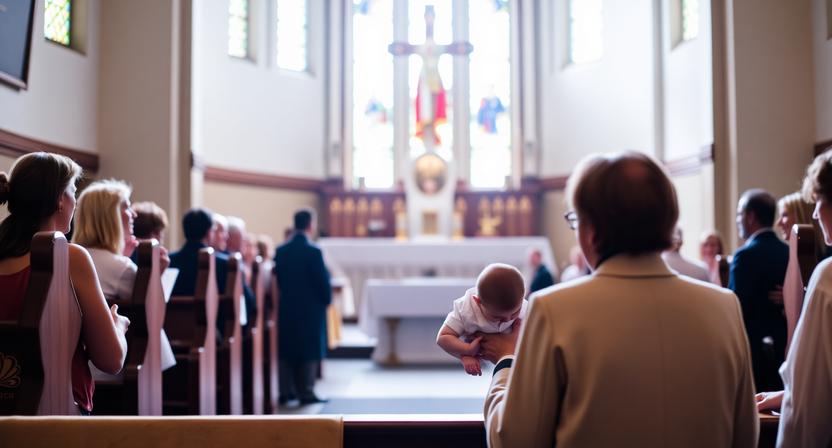
Baptism Homily
“Whoever believes and is baptised will be saved.” — Mark 16:16 | “You are my beloved Son; with you I am well pleased.” — Luke 3:22
Baptism is the door. It is the first sacrament, the foundational sacrament, the sacrament without which all others cannot be received. In the waters of Baptism, something extraordinary and irreversible takes place: a human soul is born again, adopted into the family of God, incorporated into the Body of Christ, and sealed with the gift of the Holy Spirit. It is, in every sense, a new creation.
A Baptism Homily is an opportunity to proclaim with joy and clarity what God is doing in this moment — not merely for the child or adult being baptised, but for the entire Church gathered to witness it. This page offers a complete pastoral and theological guide for preaching a rich, Scripture-rooted, and deeply moving Baptism Homily, drawing from the Gospels, the Letters of St. Paul, the Early Church Fathers, and the living tradition of the Catholic Church.
1 What Is Baptism? — The Door of New Life
Baptism is the first and foundational sacrament of Christian life. The Catechism of the Catholic Church calls it “the basis of the whole Christian life, the gateway to life in the Spirit, and the door which gives access to the other sacraments.” (CCC 1213). To understand Baptism is to understand what it means to be a Christian — not merely someone who follows the teachings of Jesus, but someone who has been plunged into the very life, death, and resurrection of Jesus Christ.
The word “baptism” comes from the Greek baptizein — to plunge, to immerse, to submerge. This is not accidental. The imagery is total immersion: going under the waters of death and rising up into new life. St. Paul captures this perfectly: “We were buried with him through baptism into death in order that, just as Christ was raised from the dead through the glory of the Father, we too may live a new life.” (Romans 6:4). Baptism is not a ceremony — it is a death and a resurrection.
2 The Baptism of Jesus — Where It All Begins
Christian Baptism is inseparable from the Baptism of Jesus himself. When Jesus waded into the waters of the Jordan and was baptised by John, he was not confessing sin — he had none. He was doing something else entirely: he was sanctifying the waters, hallowing them, filling them with his own divine life so that every person who would ever be baptised in water would be baptised into him.
The scene at the Jordan is one of the most theologically rich moments in all of Scripture. The heavens open, the Holy Spirit descends in the form of a dove, and the voice of the Father is heard: “You are my beloved Son; with you I am well pleased.” (Luke 3:22). This is the Trinity fully revealed — and it is the pattern of every Christian Baptism. The one baptised becomes God’s beloved child, anointed with the Holy Spirit, welcomed into the family of the Father.
3 Born Again — The Conversation With Nicodemus
One of the most important Baptism texts in the New Testament is the night conversation between Jesus and Nicodemus in John chapter 3. Nicodemus was a Pharisee, a ruler of the Jews, a learned and sincere man — and yet Jesus told him plainly: “Unless you are born again, you cannot see the kingdom of God.” Nicodemus was confused. How can a grown man be born again? Surely he cannot re-enter his mother’s womb?
Jesus’ answer opens the entire theology of Baptism: “Unless one is born of water and the Spirit, he cannot enter the kingdom of God.” (John 3:5). There are two births: the natural birth of flesh, and the supernatural birth of water and Spirit. Baptism is that second birth — not a biological event but a divine one, by which God himself becomes our Father and we become his children in the fullest sense.
4 St. Paul’s Theology of Baptism — Death and Resurrection
No one in the New Testament develops the theology of Baptism more richly than St. Paul. In the Letter to the Romans, chapter 6, he builds a profound meditation on what exactly happens when a person is baptised. His starting point is the death and resurrection of Christ — and he insists that in Baptism we do not merely observe these events from outside, but are incorporated into them. We die with Christ. We rise with Christ.
This is why Baptism is not simply a washing or a cleansing, though it is that too. It is a participation in the Paschal Mystery — the very heart of salvation. The old self, shaped by sin and death, goes under the water. A new self, shaped by grace and resurrection, comes up. St. Paul says with extraordinary boldness: “I have been crucified with Christ. It is no longer I who live, but Christ who lives in me.” (Galatians 2:20). Baptism makes this possible.
5 The Effects of Baptism — What Really Happens
The Catechism of the Catholic Church enumerates with beautiful clarity the effects of Baptism. These are not symbolic achievements — they are real, objective, and permanent changes in the soul of the baptised person. Understanding these effects is essential for a rich Baptism Homily.
| Effect of Baptism | What It Means | Scripture |
|---|---|---|
| Forgiveness of Original Sin | The inherited wound of Adam is healed; the soul is restored to friendship with God | Romans 5:12–19 |
| Forgiveness of Personal Sins | For adult baptism: all personal sins are forgiven completely | Acts 2:38 |
| Birth as a Child of God | The baptised person becomes God’s adopted son or daughter in the fullest sense | John 1:12–13 |
| Incorporation into Christ | The baptised is united to Christ — his body, his life, his destiny | Galatians 3:27 |
| Membership of the Church | The baptised becomes a member of the Body of Christ, the Church | 1 Corinthians 12:13 |
| Receiving the Holy Spirit | The Spirit comes to dwell within the soul as in a temple | Acts 2:38 |
| The Baptismal Character | An indelible spiritual seal — Baptism can never be repeated or undone | CCC 1272 |
6 Child of God — Adopted Into the Family of the Trinity
One of the most staggering realities of Baptism is the gift of divine adoption. St. John, in the prologue of his Gospel, says: “To all who received him, to those who believed in his name, he gave the right to become children of God.” (John 1:12). This is not metaphor or poetic language — it is a statement of ontological fact. In Baptism, our very nature is elevated. We become sharers in the divine life.
St. Paul reinforces this with equal boldness in the Letter to the Romans: “The Spirit you received does not make you slaves, so that you live in fear again; rather, the Spirit you received brought about your adoption to sonship. And by him we cry, ‘Abba, Father.'” (Romans 8:15). The cry of “Abba” — the intimate Aramaic word for father, closer to “Daddy” than to the formal “Father” — is placed on our lips by the Holy Spirit at Baptism. We are truly God’s children.
7 Water and Spirit — The Two Elements of Baptism
From the very first page of Scripture, water and the Spirit appear together. The Book of Genesis opens with the Spirit of God hovering over the waters of chaos before creation (Genesis 1:2). This primordial image — Spirit over water — runs like a golden thread through the entire Bible, reaching its fulfilment in the waters of Baptism.
Water alone does not baptise. The Spirit alone does not baptise through water without the word. It is the combination — water, the Holy Spirit, and the Word spoken in the name of the Trinity — that constitutes the sacrament. The water is the visible sign; the Spirit is the invisible grace. Together they bring about the new creation that is the baptised soul. As St. Ambrose of Milan wrote in the fourth century: “You went down into the water. Remember what you confessed, and do not lose what you received.”
8 The Beautiful Symbols of Baptism
The Rite of Baptism is rich with symbols — each one a theological statement in visible form. A good Baptism Homily can unfold these symbols for the congregation so that what they witness with their eyes they also understand with their hearts and minds.
- The Water: Death and resurrection — going under the waters of sin, rising into the life of grace. Also: cleansing, birth, refreshment, the gift of the Spirit.
- The White Garment: “You have clothed yourself in Christ” (Galatians 3:27). The new identity — purity, dignity, the righteousness of Christ covering the baptised.
- The Easter Candle: Christ the Light of the World. The baptised receives the light of faith and is called to keep it burning brightly until the Lord comes.
- The Anointing with Chrism: The word “Christ” means “anointed one.” The baptised is anointed as priest, prophet, and king — a share in Christ’s own mission.
- The Name: A patron saint is chosen — a companion and intercessor for the journey. The name also signifies personal identity before God.
- The Ephphatha (Opening of Ears and Mouth): A prayer that the baptised may hear God’s word and proclaim the faith — a echo of Jesus healing the deaf-mute (Mark 7:34).
9 Infant Baptism — Grace Before Merit
The Catholic Church baptises infants, and this practice goes back to the earliest centuries of Christian history. The theological reason is both simple and profound: Baptism is entirely God’s gift, not a reward for human achievement or understanding. An infant cannot understand the sacrament — and that is precisely the point. God’s grace precedes all human response. The gift is given before the child can even ask for it.
This is why infant Baptism is such a powerful proclamation of the nature of salvation itself: it is pure grace, pure gift, pure initiative from God. The parents and godparents receive the child’s baptismal faith on their behalf and commit to raising the child in the faith until, at Confirmation, the young person personally ratifies and owns what was given as a gift in Baptism.
10 Baptism and the Holy Trinity
Every valid Christian Baptism is Trinitarian. The formula given by Christ himself in the Great Commission is unambiguous: “Go therefore and make disciples of all nations, baptising them in the name of the Father and of the Son and of the Holy Spirit.” (Matthew 28:19). Not “in the names” — but “in the name” — singular. The three persons are one God, one name, one divine action.
This means that at every Baptism, all three persons of the Trinity are actively present and at work. The Father adopts the baptised as his beloved child. The Son incorporates them into his own Body and shares his own divine Sonship. The Holy Spirit comes to dwell within the soul as in a living temple, transforming it from within. Baptism is, in the fullest sense, an encounter with the living God — all three persons, fully present, fully active, fully giving themselves.
11 The Role of Godparents — Witnesses and Companions in Faith
Godparents are not merely honorary figures at a Baptism celebration — they are given a serious spiritual responsibility. The Church asks them to accompany the baptised person through the journey of faith: to pray for them, to support the parents in raising the child in the faith, and to be a living witness to the Gospel in the child’s life.
A Baptism Homily is a wonderful opportunity to address the godparents directly and remind them of the beautiful weight of the role they have accepted. They stand as the Church’s special representatives for this child. Should the parents ever be unable to continue their role, the godparents are called to step forward. This is not a title — it is a vocation.
- Pray for your godchild by name — regularly and faithfully
- Be a visible, living example of Catholic faith in their life
- Remember them on their Baptism anniversary and feast day
- Walk with them through Confirmation and beyond
- Be someone they can turn to with questions of faith and life
12 The Role of Parents — The Domestic Church
Parents who bring their child to Baptism are doing something profound: they are making a promise to God on behalf of their child. They are saying: “We will raise this child to know you, to love you, and to serve you.” The Baptism of a child is not the end of a religious obligation — it is the beginning of the most important one. The home becomes what the Church calls the “domestic Church” — the first place where faith is lived, prayed, and handed on.
The Baptism Homily should speak warmly and directly to parents: your child will learn what prayer is by watching you pray. They will learn what forgiveness is by seeing you forgive. They will learn whether faith matters by observing whether it shapes your daily life. No one in the world has more influence on the faith of a child than their parents. This is an awesome privilege and a sacred responsibility.
13 Baptism and Mission — Sent Into the World
Baptism is not only about what we receive — it is also about what we are sent to do. The Great Commission of Matthew 28 links Baptism directly to mission: “Go… make disciples… baptising them… teaching them.” To be baptised is to be sent. Every baptised Christian is a missionary — not merely those who travel to foreign lands, but everyone who carries the light of faith into their daily life, their workplace, their family, their neighbourhood.
The three-fold anointing of Baptism — as priest, prophet, and king — expresses this missionary dimension beautifully. As priest, the baptised offers their daily life to God. As prophet, they speak the truth of the Gospel in the world. As king, they work to build the Kingdom of God wherever they are placed. Baptism is not a private spiritual transaction — it is a public commissioning.
14 Baptism in the Early Church — Pentecost and Beyond
The first Baptisms in Christian history took place on the day of Pentecost. When Peter concluded his great sermon and the crowd was “cut to the heart” and asked what they must do, his answer was immediate and clear: “Repent and be baptised, every one of you, in the name of Jesus Christ for the forgiveness of your sins. And you will receive the gift of the Holy Spirit.” (Acts 2:38). That day, three thousand people were baptised — the Church was born in a flood of water and Spirit.
The Early Church understood Baptism with a vividness and seriousness that can challenge and inspire us today. The catechumenate — the period of preparation for Baptism — lasted up to three years. The candidates fasted, prayed, studied, and were scrutinised. The night of Easter Vigil, they were baptised in flowing water, anointed, clothed in white, and received their first Eucharist. Baptism was not taken lightly — because it was understood to be everything.
15 Living Your Baptism — Every Day
Martin Luther, despite his separation from Rome, had one practice that Catholic preachers would do well to commend: every morning, he would touch water and say, “I am baptised.” Not “I was baptised” — as though it were a past event — but “I am baptised” — present tense, present reality. Baptism is not merely something that happened to us once. It is our identity, our status, our permanent condition before God.
The closing call of a Baptism Homily is an invitation to the entire congregation to remember and renew their own Baptism. At every Easter Vigil and at every Baptism we witness, the Church invites us to renew our baptismal promises — to reaffirm our renunciation of sin and our faith in the Triune God. Let this Baptism be not only the beginning of a new life for the one baptised, but a renewal of life for all who witness it.
- Remember your Baptism anniversary — celebrate it as a second birthday
- Make the Sign of the Cross with holy water mindfully — it recalls your Baptism
- Renew your baptismal promises each Easter with full heart and full voice
- Live as a child of God — because that is what you truly and permanently are
- Let your life be the homily that proclaims what Baptism has made you
“You Are My Beloved Child”
Heavenly Father, you have welcomed this child into your family today — not because of anything they have done, but because of the boundless generosity of your love. May the grace of this Baptism accompany them through every day of their life. May they know always that they are your beloved child, sealed with your Spirit, clothed in Christ, and destined for eternal life. May their parents and godparents walk faithfully beside them — and may all of us, renewed in the memory of our own Baptism, live more fully as children of the light. Amen.
