
Every priest and deacon knows the Sunday morning challenge. You stand before your congregation, tasked with bringing ancient Scripture to life in ways that touch modern hearts. The right story can bridge centuries, transforming abstract theology into lived experience.
100 Moral Stories for Sunday Homily — Catholic Preaching Resource
This collection offers 25 carefully crafted homily stories. Each narrative connects biblical truth with everyday life. These stories span all liturgical seasons and address the spiritual questions your parishioners carry silently.
Whether you serve a small rural parish or a bustling urban congregation, these stories adapt to your unique ministry context. They provide the foundation you need to craft homilies that resonate, inspire, and transform.
Receive Weekly Homily Stories
Join thousands of priests and deacons who receive fresh homily stories every week. Never face a blank page again when preparing your Sunday message.
Advent Season: Stories of Waiting and Hope
Advent calls us to expectant waiting. These stories help your congregation understand that waiting itself can be a sacred act of preparation.

Story 1: The Lighthouse Keeper’s Vigil
A lighthouse keeper maintained his post for forty years. Every night, he climbed the spiral stairs to ensure the light burned bright. One stormy evening, a ship captain later told him his light had saved three hundred souls.
The keeper had never seen the ships he guided. He simply trusted that his faithful presence mattered. His daily discipline of climbing those stairs parallels our Advent watching.
We may not see immediate results from our spiritual preparation. Yet our faithful waiting prepares us to recognize Christ when He comes. Like the lighthouse keeper, we trust that our vigilance serves a purpose beyond our understanding.
Story 2: The Pregnant Woman’s Journey
Maria was eight months pregnant when she learned her husband needed emergency surgery. The hospital was four hours away. During that long drive, she felt her baby move and realized something profound about Mary’s journey to Bethlehem.
Mary carried not just a child but the Savior of the world. Every step of that donkey, every discomfort, was part of the mystery. Maria understood that waiting often involves both burden and blessing.
In our Advent waiting, we carry something precious too. We carry hope, anticipation, and the promise of God’s faithfulness. The discomfort of waiting prepares us for the joy of receiving.
Story 3: The Farmer’s Trust
Old Thomas planted his fields each spring with the same ritual his father taught him. He would place each seed carefully and whisper a prayer. His grandson once asked why he prayed over seeds.
Thomas explained that planting requires faith in processes you cannot control. You trust the rain will come, the sun will shine, and the earth will do its mysterious work. Advent is the Church’s planting season.
We plant prayers, acts of kindness, and moments of silence. We trust that God is working beneath the surface, preparing something beautiful we cannot yet see. The farmer knows that patient trust always precedes the harvest.

Story 4: The Night Watch
Hospital nurse Jennifer worked the night shift for fifteen years. She often said the darkest hours revealed the most about human character. Some patients panicked in darkness while others found unexpected peace.
One elderly man told her that nighttime helped him understand God better. In darkness, he stopped relying on what he could see and learned to trust what he knew. Advent occurs in the darkest season for this reason.
We practice trusting God when circumstances obscure our vision. The night watch teaches us that dawn always comes to those who remain vigilant. Our waiting in darkness makes the light more precious when it finally arrives.
Christmas Season: Stories of Incarnation and Wonder
Christmas celebrates the radical truth that God became human. These stories illuminate how the divine enters ordinary life in unexpected ways.
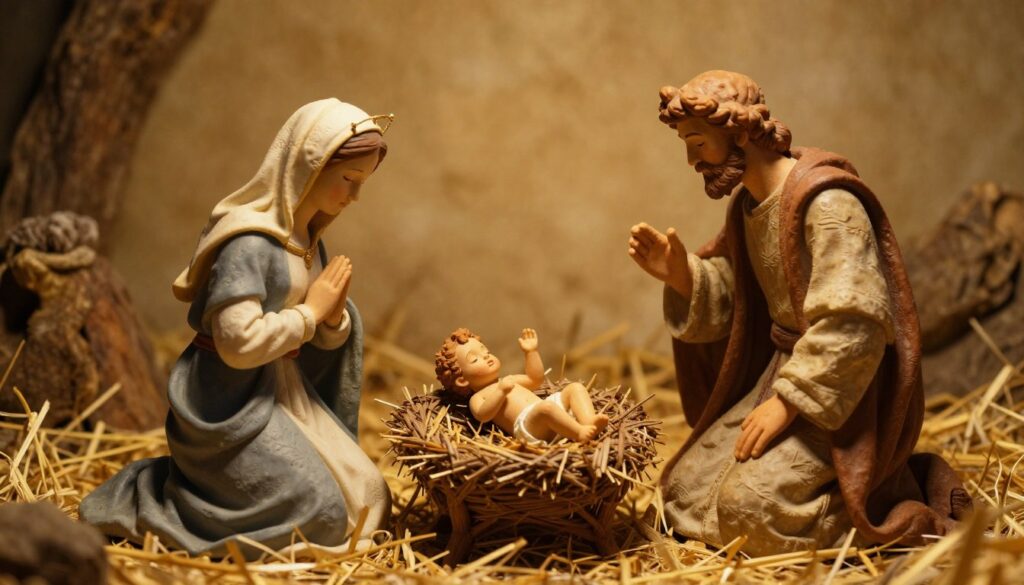
Story 5: The Unexpected Guest
Robert planned a quiet Christmas dinner for two. His wife had passed away that year, and loneliness weighed heavily. A knock at the door revealed a stranded traveler whose car had broken down nearby.
Robert invited the stranger in. During dinner, the man shared stories that made Robert laugh for the first time in months. Later, Robert realized he had entertained an unexpected gift on Christmas.
The mystery of the Incarnation often arrives unannounced. God enters our lives through ordinary circumstances that turn extraordinary. When we remain open to the unexpected, we discover that divine presence often wears disguise.
Story 6: The Child’s Question
Seven-year-old Emma asked her father why God chose to be born as a baby instead of appearing as a powerful king. Her father thought carefully before answering this profound theological question.
He explained that babies teach us about vulnerability and trust. God wanted us to understand that true strength often looks like weakness. A baby requires care, attention, and love to survive.
In the Christmas mystery, God invites us into relationship through vulnerability. The Christ child does not demand our fear but requests our love. This divine humility transforms how we understand power itself.
Story 7: The Gift Return
Store manager Patricia noticed a woman returning an expensive coat on December 26th. The woman explained she had bought it for herself but realized her neighbor’s family needed winter coats more desperately.
Patricia watched the woman leave with five inexpensive coats instead of one luxury item. This exchange embodied the true Christmas spirit more than any church service Patricia had attended that year.
The Incarnation teaches us that God exchanged heavenly glory for human limitation. When we practice similar generosity, we participate in the ongoing mystery of Christmas. The gift is not what we receive but what we become.

Story 8: The Homeless Nativity
Father Miguel served at a downtown parish where homeless individuals often sought shelter. On Christmas Eve, he found three homeless people sleeping near the church nativity scene, arranged exactly like the Holy Family.
Rather than disturbing them, he realized they were living icons of the Christmas story. Mary and Joseph were homeless refugees seeking shelter when Jesus was born. The Christmas mystery happens among the displaced and vulnerable.
Today, Christ continues to be born in unexpected places among forgotten people. When we serve the marginalized, we encounter the ongoing Incarnation. The Christmas story never stopped happening; we simply need eyes to recognize it.
Download All 25 Stories in PDF Format
Get the complete collection organized by liturgical season. Perfect for offline reading and quick reference during homily preparation.
Lenten Season: Stories of Conversion and Sacrifice
Lent invites us into the desert of self-examination. These stories explore the transformation that occurs when we face our limitations honestly and embrace the mystery of redemptive suffering.

Story 9: The Marathon Runner’s Wall
Daniel trained six months for his first marathon. At mile twenty, his body screamed for him to stop. Every muscle ached. His mind invented convincing reasons to quit the race entirely.
A fellow runner noticed his struggle and ran alongside him. She did not speak but simply maintained presence. Her companionship gave Daniel strength to continue. He finished the race and learned something about perseverance.
The Lenten journey often brings us to our personal wall. We face limitations we prefer to ignore. Yet Christ walks alongside us in our struggle. His presence provides strength when our own resources run empty. The mystery of Lent is that we are never alone in our desert.
Story 10: The Recovering Addict’s Daily Choice
Marcus had been sober for five years. People assumed it got easier with time, but he explained that every single day required a conscious choice. Some days the choice felt simple; other days it demanded everything.
He compared his recovery to Lent because both required daily recommitment. You cannot coast on yesterday’s decision. Transformation happens through accumulated small choices, not one dramatic moment.
Our Lenten disciplines mirror this reality. We choose again each day to fast, pray, and give alms. The forty days teach us that conversion is not an event but a process. God honors our daily yes more than our occasional grand gesture.
Story 11: The Sculptor’s Vision
Famous sculptor Anne explained her process to students. She said every sculpture already exists within the stone. Her job was simply removing everything that did not belong to reveal what was hidden inside.
A student asked if it hurt to remove so much material. Anne replied that cutting away the unnecessary always involves loss, but it is the only path to revealing truth. Lent functions as spiritual sculpture.
God chips away our false securities, comfortable illusions, and protective barriers. The process often feels like loss because we mistake these things for our true self. Yet beneath the excess, God reveals who we were created to be all along.

Story 12: The Widow’s Grief
Catherine lost her husband suddenly. The first year of widowhood taught her about different types of death. She died to the identity of wife, to shared plans, to the future they had imagined together.
Friends offered platitudes about time healing all wounds. But Catherine discovered something deeper than healing. She learned that death precedes resurrection. Her grief became the unlikely path to discovering new life she never anticipated.
The Lenten mystery teaches us to embrace necessary deaths. We die to selfishness, pride, and false independence. These deaths feel like loss because they are genuine losses. Yet only through such dying do we discover the resurrection life that God intends for us.
Easter Season: Stories of Resurrection and New Life
Easter proclaims the impossible truth that death does not have the final word. These stories illustrate how resurrection power continues to transform lives today.

Story 13: The Garden’s Spring Return
Margaret tended her garden for forty years. Every winter, she wondered if certain plants would return. Every spring, new growth pushed through soil that appeared lifeless. The mystery never lost its power to amaze her.
She explained to her granddaughter that gardening requires faith in resurrection. You trust that what appears dead is merely dormant. You believe that life persists even when evidence suggests otherwise.
The Easter mystery operates on this same principle. Christ’s resurrection was not resuscitation but transformation. Death itself became the passage to new life. When we face our own small deaths, we trust that resurrection power is already at work beneath the surface.
Story 14: The Cancer Survivor’s Gratitude
James received a terminal cancer diagnosis. He prepared for death, said his goodbyes, and made peace with his life. Then, against all medical expectation, the cancer went into complete remission.
Friends congratulated him on beating death. But James said he had not beaten death; he had passed through it. The man who received the diagnosis was not the same man who heard the words remission. He had been transformed by facing mortality.
Easter teaches us that resurrection is not simply about continuing life but about transformed existence. We do not return to what we were before. We emerge changed, carrying the scars of our suffering but no longer defined by them. New life does not erase the old but transcends it.
Story 15: The Impossible Forgiveness
Sarah’s daughter was killed by a drunk driver. The anger consumed her for years. She imagined confronting the driver, making him understand the depth of her loss. When the opportunity finally came, something unexpected happened.
She looked at the broken man before her and saw not a monster but a fellow sufferer. Words of forgiveness emerged from somewhere beyond her conscious will. The forgiveness did not erase her pain but somehow released her from its prison.
Resurrection power manifests in impossible forgiveness. When we extend grace that exceeds our natural capacity, we participate in Easter mystery. God’s resurrection power works through us, transforming both the forgiver and the forgiven. This is how new life spreads through broken relationships.

Story 16: The Failed Business’s Second Chance
Robert built a successful business over twenty years. Economic collapse destroyed everything in six months. At age fifty-five, he faced starting over with nothing. The failure felt like a kind of death to his identity and security.
Two years later, he launched a new venture built on lessons learned from failure. The second business succeeded beyond his first. Robert said that his failure was actually a necessary death that led to greater life.
Easter promises that our failures are not final. God specializes in bringing life from death, hope from despair, and success from failure. The resurrection does not undo our crucifixions but transforms them into unexpected pathways to new possibilities.
Never Run Out of Homily Inspiration
Join our community of clergy who receive weekly homily stories aligned with the liturgical calendar. Fresh narratives delivered every Monday morning.
Ordinary Time: Stories of Everyday Holiness
Ordinary Time celebrates the extraordinary grace hidden in common life. These stories reveal how God works through daily routines and mundane moments.

Story 17: The Janitor’s Ministry
Thomas worked as a school janitor for thirty years. Teachers barely noticed him, and students sometimes mocked his humble position. Yet Thomas approached his work as sacred ministry, seeing his role as caring for the space where young minds grew.
At his retirement party, former students returned to honor him. Dozens testified that his kind words, gentle presence, and quiet dignity had shaped their lives. What appeared ordinary was actually extraordinary ministry unfolding daily.
Our ordinary vocations carry divine significance. God sanctifies common work when we offer it with love. The father who provides for his family, the nurse who comforts patients, the teacher who invests in students – all participate in God’s ongoing work in the world. Holiness hides in ordinary faithfulness.
Story 18: The Traffic Jam Patience
Angela sat trapped in gridlock traffic, already late for an important meeting. Frustration mounted as minutes ticked by. Then she noticed the driver beside her singing joyfully, completely at peace despite the circumstances.
That moment became a spiritual teacher for Angela. She realized she had spent years rushing toward the next thing while missing the present moment. The traffic jam became an unexpected opportunity to practice patience and presence.
Ordinary time teaches us that every moment offers opportunity for spiritual growth. We do not need dramatic circumstances to encounter God. Divine presence dwells in traffic jams, grocery store lines, and waiting rooms. The challenge is cultivating awareness in the midst of the mundane.
Story 19: The Listening Neighbor
Elderly Mrs. Chen lived alone next door to the Martinez family. Every week, she invited their teenage son over for tea. She simply listened as he talked about school, friends, and life challenges.
Years later, that boy, now a successful adult, returned to thank her. He explained that her listening presence during his turbulent teen years had saved his life. She had offered him something his busy parents could not – unhurried attention.
The ministry of presence is among the most powerful gifts we offer. In a world obsessed with productivity, simply being fully present with another person becomes a radical act. God often works through ordinary conversations and everyday availability rather than grand gestures.

Story 20: The Daily Commute Prayer
Mark transformed his forty-minute commute into daily prayer time. Instead of cursing traffic or mindlessly listening to radio, he used that time to talk with God, reflect on Scripture, and pray for people he would encounter that day.
Coworkers noticed a change in Mark’s demeanor. He arrived at work peaceful rather than stressed. His daily discipline of converting commute time into prayer time gradually transformed his entire outlook on life and work.
Ordinary time invites us to sanctify ordinary routines. We can transform mundane activities into spiritual practices through intentionality. The commute becomes chapel, the kitchen becomes classroom, and daily work becomes worship. God meets us in the ordinary when we create space for divine presence.
Story 21: The Grocery Store Kindness
Susan noticed the woman ahead of her in the checkout line desperately searching her purse for missing cash. The woman’s children watched anxiously as their mother’s embarrassment grew. Susan quietly handed the cashier enough money to cover the difference.
The grateful mother asked for Susan’s contact information to repay her. Susan simply said to do the same for someone else someday. That small act of kindness rippled outward as the woman did indeed help others in turn.
Ordinary time spirituality focuses on small acts of love multiplied across time. We do not need opportunities for heroic sacrifice. Everyday kindness, consistently practiced, transforms communities. When we treat ordinary encounters as opportunities for expressing Christ’s love, we become living gospels.
Special Feasts: Stories for Major Celebrations
Throughout the liturgical year, special feasts commemorate significant mysteries and saints. These stories help illuminate major celebrations beyond the primary seasons.
Story 22: The Assumption – Rising Above
Pilot Maria flew humanitarian missions to disaster zones. During one particularly dangerous flight, equipment failure forced her to rely entirely on instruments while navigating through thick clouds. She could not see anything outside the cockpit.
When she finally broke through the clouds, brilliant sunshine and clear sky stretched endlessly above. The storm that had threatened her was now far below. That experience taught her about transcendence – rising above circumstances that appear overwhelming.
The Assumption of Mary celebrates her being taken body and soul into heaven. This feast reminds us that our ultimate destiny transcends earthly limitations. Like Maria breaking through storm clouds, Mary’s assumption reveals that God lifts us above the storms that threaten to overwhelm us. Our bodies and souls are destined for transformation and elevation.
Story 23: All Saints Day – The Cloud of Witnesses
Marathon runner David struggled during the final miles of his race. His father had recently died, and grief weighed heavily. Suddenly, David imagined his father running beside him, encouraging him as he had done during David’s childhood races.
Though his father had died, his presence and influence remained powerfully alive. David finished the race feeling accompanied by love that transcended death. The communion of saints became real to him in that moment.
All Saints Day celebrates the ongoing communion between the living and the dead. The saints who have gone before us continue to accompany our journey. Their prayers support us, their examples inspire us, and their love surrounds us. We run our race accompanied by a great cloud of witnesses who understand our struggles because they faced similar challenges during their earthly lives.
Story 24: Pentecost – The Unexpected Fire
Firefighter James responded to a house fire that trapped a family inside. Fear nearly paralyzed him at the doorway, but something beyond normal courage propelled him forward. He rescued three people, later saying he had no explanation for the strength that came over him.
James described it as being filled with power beyond himself. His body acted while his mind still processed the danger. He later reflected that he had experienced something similar to what the apostles must have felt at Pentecost.
Pentecost celebrates the Holy Spirit descending as fire and wind upon the gathered disciples. This same Spirit empowers us for tasks that exceed our natural abilities. When we face situations requiring more than we possess, the Spirit provides unexpected courage, wisdom, and strength. We become capable of love and service beyond our natural capacity.

Story 25: Corpus Christi – The Bread of Life
Baker Giovanni inherited his grandfather’s bakery in a small Italian village. Every morning at five, he began mixing dough, maintaining traditions passed through generations. The villagers depended on his bread to sustain them through each day.
Giovanni understood his work as more than commerce. He was providing daily sustenance for his community. Each loaf represented care, skill, and nourishment. When his grandson asked why he worked such difficult hours, Giovanni explained that bread connects us to life itself.
The feast of Corpus Christi celebrates the Eucharist as the Bread of Life. Just as physical bread sustains our bodies, the Eucharist nourishes our souls. Christ offers Himself as daily bread, providing the spiritual sustenance we need for our journey. When we receive the Eucharist, we consume the mystery that connects us to divine life. This sacred meal transforms us into what we receive – the Body of Christ.
How to Adapt These Homily Stories for Your Parish
Each congregation brings unique characteristics, needs, and contexts. These stories provide foundation material that requires personalization to achieve maximum impact with your specific community.
Understanding Your Congregation
Consider the demographic composition of your parish. Are you serving primarily elderly parishioners, young families, or a diverse mix? Each group resonates with different story elements.
Urban parishes face different challenges than rural communities. Socioeconomic factors shape how people receive biblical teaching. A story about financial sacrifice lands differently in affluent versus struggling communities.
Cultural backgrounds influence interpretation. What one culture considers a powerful metaphor might confuse another. Pay attention to the cultural composition of your congregation when selecting and adapting stories.
Connecting Stories to Scripture
Never let stories overshadow Scripture. The homily exists to break open God’s Word, not to entertain. Each story should illuminate the biblical text assigned for that Sunday rather than standing alone.
Begin with careful study of the readings. Identify the central message God communicates through that particular Scripture passage. Then select a story that creates a bridge between the ancient text and contemporary experience.
Explain the connection explicitly. After sharing a story, return directly to the Scripture and show how the narrative illuminates the biblical truth. This prevents stories from becoming mere entertainment that distracts from the Word.
Timing and Placement
Most homilies should run between eight and twelve minutes. A compelling story typically requires two to three minutes to tell effectively. This leaves adequate time for Scripture exposition, theological reflection, and practical application.
Consider where to place the story within your homily structure. Some preachers open with a story to capture attention immediately. Others prefer placing stories midway to illustrate theological points. Concluding with a story creates emotional impact that lingers.
Avoid using multiple stories in a single homily unless the homily extends beyond typical length. Multiple stories can fragment focus and dilute impact. One well-chosen, carefully developed narrative usually serves better than several brief anecdotes.
Adding Personal Elements
These stories gain power when you add personal touches that reflect your unique voice and experience. Consider how you might incorporate local references, parish-specific details, or regional characteristics that make stories feel immediately relevant.
If a story reminds you of a parishioner’s experience (maintaining appropriate confidentiality), mention that connection. When congregants recognize their own lives reflected in homilies, engagement deepens significantly.
Your own spiritual journey matters. Where appropriate, share how a particular story connects to your personal faith experience. Vulnerability builds trust and demonstrates that you practice what you preach.
Seasonal Sensitivity
Match story emotional tone to liturgical season. Advent stories should emphasize waiting and anticipation. Lenten narratives focus on conversion and sacrifice. Easter stories celebrate resurrection and new life. Ordinary Time explores everyday holiness.
Pay attention to secular calendar events that impact your congregation. During tax season, financial stewardship stories resonate. Back-to-school time makes education themes relevant. Holiday seasons bring family dynamics into focus.
Local events matter too. If your community recently experienced tragedy, select stories that address grief and hope. Regional celebrations or challenges provide opportunities for connecting faith to immediate life circumstances.
Transform Your Homily Preparation Process
Save hours each week with our complete homily story library. Receive stories organized by liturgical season, Scripture readings, and pastoral themes. Over 5,000 priests and deacons already trust our weekly resources.
Need Help Adapting Stories for Your Parish?
Our team of experienced homileticians offers personalized consultation for priests and deacons. We help you develop a preaching style that authentically connects with your unique congregation while remaining theologically sound and pastorally effective.
Conclusion: The Power of Story in Proclaiming the Gospel
Jesus taught primarily through stories. Parables carried the mystery of the Kingdom in accessible narratives that listeners remembered long after He spoke. This teaching method was not simplistic but profoundly sophisticated.
Stories bypass intellectual defenses and speak directly to the heart. They create imaginative space where listeners can encounter truth without feeling attacked or preached at. A well-told story invites people into experience rather than merely conveying information.
The twenty-five stories in this collection provide tools for your sacred ministry of preaching. They represent starting points rather than finished products. Take them, adapt them, and make them your own through the unique lens of your pastoral experience.

Remember that your primary calling is breaking open Scripture, not entertaining congregations. Stories serve the Word rather than replacing it. When used well, narrative becomes a vehicle that carries biblical truth into contemporary hearts.
Your congregation gathers each Sunday hungry for life, meaning, and hope. They come carrying burdens, questions, and secret struggles. Through your homily, Christ speaks words of comfort, challenge, and transformation. Stories help you become an effective instrument of that divine communication.
May these homily stories serve your ministry well. May they help you connect ancient Scripture to modern life in ways that inspire, challenge, and transform. May your preaching bear abundant fruit in the lives of those God has entrusted to your pastoral care.
The work of preparing homilies week after week requires dedication, creativity, and reliance on the Holy Spirit. You do not labor alone. The same Spirit who inspired Scripture also inspires your preaching. Trust that God will use your faithful efforts to accomplish divine purposes beyond your understanding.
Daily Bread August – 2026 – Mass Readings and Reflections

